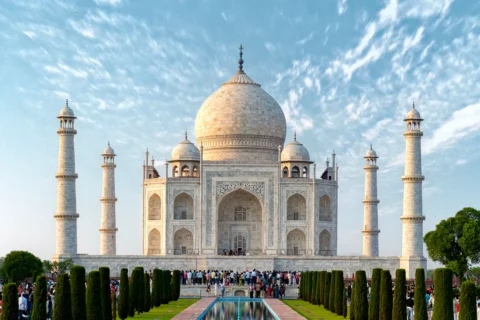
The Taj Mahal may be the reason you first imagine Agra, but it need not be the whole of your visit. The city’s Mughal heritage offers a wider conversation about power, craftsmanship, landscape and the way imperial buildings were experienced.
Agra Fort makes a particularly useful counterpoint to the Taj Mahal. Its red sandstone and marble spaces invite a different set of questions, helping a visitor move beyond the impression of one extraordinary monument standing alone.
Look for connections
Ask your guide to relate the major visits rather than treating them as separate chapters with no common thread. A discussion of architectural detail, materials or courtly life can help you understand why two buildings in the same city feel so different.
Give yourself time to notice smaller elements as well: a change in the treatment of a surface, a carefully framed view or the way a courtyard directs movement. These details often make historical explanations easier to remember.
Protect the experience from the timetable
A comfortable Agra visit needs to account for arrival, rest and onward travel as well as sightseeing. Confirm monument opening arrangements for your dates and avoid leaving every important visit until the final available window.
If crafts interest you, a properly chosen demonstration can extend the architectural conversation into the present, without any obligation to purchase. Tell us whether Agra is a short visit or part of a Golden Triangle journey. We can help give the city an appropriate place in the wider route.
Explore our Uttar Pradesh Travel Guide destination page, or plan a private journey with Anandam Tourlance.
Further reading: official destination and heritage information. Check current visitor arrangements before travelling.